






Loss of GOES-17 Satellite Hinders Hurricane Forecasting Accuracy in 2023
Introduction
As the 2023 hurricane season opens with a forecast of 14 to 21 named storms, the recent loss of the GOES-17 satellite has posed significant challenges in hurricane forecasting. This disruption affects the accuracy and reliability of predictions that are crucial for public safety. Below, l explores the consequences of this satellite loss and the steps being taken to mitigate its impact.
The Importance of GOES-17 in Hurricane Forecasting
The GOES-17 satellite, part of the National Oceanic and Atmospheric Administration’s (NOAA) GOES-R series, played a critical role in monitoring weather systems over the Pacific Ocean and the U.S. West Coast. Equipped with an advanced sensor, the Advanced Baseline Imager (ABI), GOES-17 revolutionized hurricane forecasting by providing high-resolution imagery and data, enhancing the ability to track storm development and intensity in real-time.
Unfortunately, a cooling system malfunction compromised the reliability of ABI on GOES-17, a factor that severely impacted the satellite’s operability. The loss of crucial satellite data hinders ongoing efforts to predict extreme weather accurately, affecting emergency preparedness and response.
Challenges for Meteorologists in the 2023 Hurricane Season
With the GOES-17 satellite out of operation, meteorologists face hurdles in maintaining the precision and timeliness of their forecasts. The absence of live satellite data disrupts the continuity necessary for developing accurate, dynamic storm models.
- Impacted real-time monitoring of tropical cyclones and developing storms.
- Reduced ability to accurately forecast rapid intensification of hurricanes.
- Challenges in improving forecast lead time, crucial for timely public alerts and response.
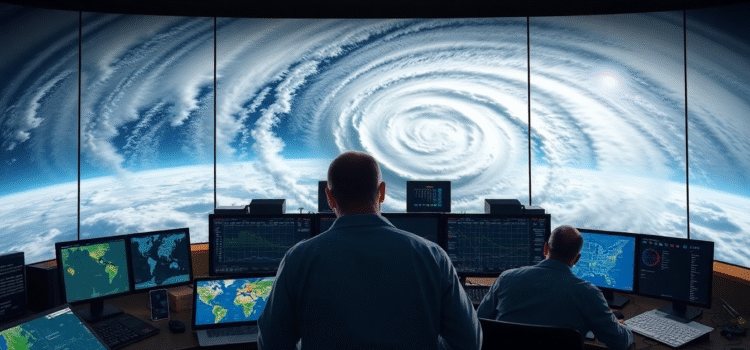
Sample satellite image demonstrating the type of data used in weather forecasting.
Path Towards GOES-17 Data Replacement
The commissioning of GOES-18 is a strategic move by NOAA intended to restore confidence in satellite-based hurricane forecasts. However, the transition requires time for full operational integration, and the interim period may continue to present forecasting challenges. Meteorologists and related agencies are utilizing alternative sources and satellite data to fill the existing gaps caused by the GOES-17 malfunction.
Future Prospects and Actionable Insights
Despite the setbacks, efforts are underway to harness other satellite technologies and enhance data sharing collaborations globally. With the integration of GOES-18, the aim is to bolster the resilience of forecast systems against future anomalies.
For stakeholders, understanding the potential impact of satellite data gaps is vital for adjusting emergency plans and public communication strategies. Collaboration remains a key element in adapting to the changing atmospheric conditions and raising public awareness effectively.
Conclusion
The loss of the GOES-17 satellite introduces substantial hurdles in the realm of hurricane forecasting for the 2023 season. While these challenges present real risks, proactive measures and technological advancements aim to mitigate this gap’s effects. Engaging in ongoing dialogue and staying informed about updates can help communities better prepare for the unpredictable nature of the hurricane season.
Readers are encouraged to share their thoughts or experiences regarding hurricane preparedness by commenting below.
Sources
FAQ
What is the GOES-17 satellite malfunction impact? The malfunction of GOES-17 limits real-time meteorological monitoring and reduces forecasting accuracy, especially over its designated regions like the Pacific Ocean.
What challenges does hurricane forecasting face in 2023? Challenges include decreased accuracy in predicting storm intensity and development due to the loss of GOES-17 data, impacting timely warnings.
How do weather prediction satellite issues affect the 2023 season? Satellite issues create data gaps, complicating the development of accurate weather models critical for advanced forecasting and warning systems.
What are the consequences of the GOES-17 satellite loss? The consequences involve compromised storm prediction models and reduced reliability in data, impacting emergency preparedness and public safety measures.
Comments