






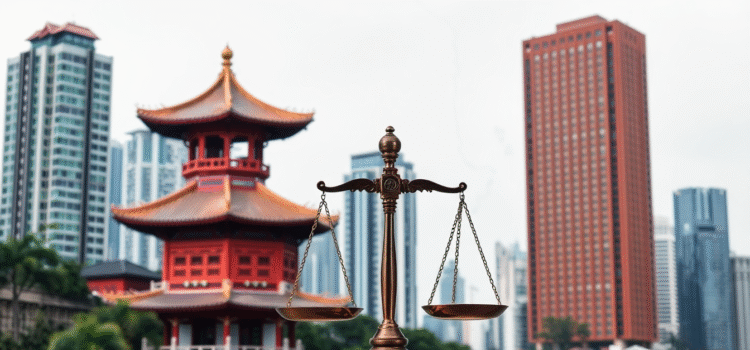
Chinese Initiative in Hong Kong Challenges World Court with New Judicial Body
The legal arena of Hong Kong is witnessing a monumental shift with the establishment of a new judicial body by the Chinese government. This initiative, aimed at handling national security cases, has extended its jurisdiction beyond the traditional legal frameworks of Hong Kong, igniting concerns on a global scale. With the backdrop of the 2020 national security law that led to over 200 arrests, a new chapter unfolds challenging the norms of international law.
Evolution of Hong Kong’s Judicial Landscape
Since the imposition of the national security law, Hong Kong has been at the center of Chinese legal reforms. The introduction of the new judicial body signals an expansion of legal authority in Hong Kong, raising alarms about the city’s judicial independence. As a signatory to the International Covenant on Civil and Political Rights, the developments have stirred debates on Hong Kong’s legal autonomy and the implications for international law.
World Court Challenges and Global Response
The new judicial body’s alignment with international justice standards is under examination by the World Court. As discussions unfold, the global legal community is poised to respond to this challenge faced by Hong Kong. Concerns revolve around whether the sovereignty and legal frameworks within Hong Kong can withstand such transformations and maintain compliance with global legal standards.
Impact on Hong Kong’s Legal Community
As the legal proceedings evolve, Hong Kong’s judiciary and legal practitioners are observing the potential effects on judicial independence. The establishment of this body not only invites questions about Chinese governance in Hong Kong but also the broader Sino-Hong Kong legal tensions and possible implications for future sovereignty debates.
Key Takeaways
- The new judicial body intensifies the debate on Hong Kong’s legal autonomy and sovereignty.
- The World Court’s forthcoming response could shape future international legal norms.
- The situation underscores the impact of Chinese judicial reforms on global legal landscapes.
Conclusion
In conclusion, the introduction of a new judicial body in Hong Kong marks a critical juncture in the region’s legal framework and its relationship with international justice bodies. The future interactions between Hong Kong and the World Court will potentially redefine the global boundaries of judicial independence. Engagement from legal communities and global courts will play a pivotal role in shaping the dynamics of this ongoing legal discourse.
Readers are encouraged to reflect on these developments and share their thoughts on the implications for international law.
Sources
FAQ
What is the new judicial body in Hong Kong? The new judicial body is established by the Chinese government to handle national security cases in Hong Kong, expanding its jurisdiction beyond traditional legal frameworks.
How does this affect Hong Kong’s legal autonomy? This development raises concerns about the erosion of judicial independence and the adherence to international law, impacting Hong Kong’s legal autonomy.
What is the World Court’s stance? The World Court is yet to make a formal response but is currently examining the compatibility of this judicial body with international justice standards.
Comments