




Pope Francis’s Legacy: Reconciliation and the Historic Apology to Indigenous Peoples


Pope Francis’s Legacy: Reconciliation and the Historic Apology to Indigenous Peoples

Introduction

In the landscape of global religious dialogue and reconciliation, Pope Francis has emerged as a pivotal figure in addressing historical wrongs. His historic apology to Canadian Indigenous peoples in 2022 marked a significant milestone in healing the wounds inflicted by the Catholic Church’s role in residential schools. This article explores the broader implications of this apology and Pope Francis’s commitment towards reconciliation and healing.

The Papal Apology: A Significant Step Towards Healing

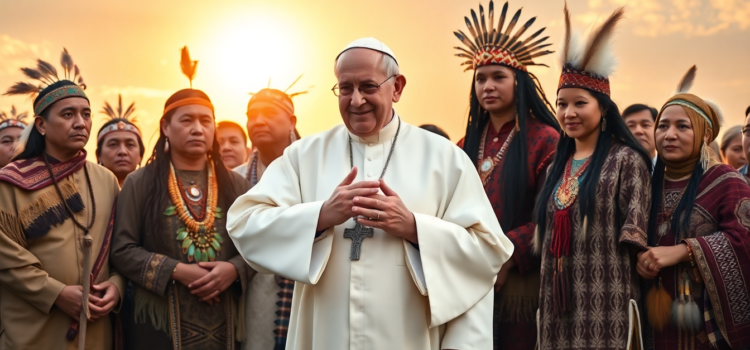
In 2022, Pope Francis delivered a moving apology to leaders of Canada’s Indigenous communities, acknowledging the Church’s role in operating a majority of the country’s residential schools. Responding to the Truth and Reconciliation Commission’s call from 2015, his apology was not only a personal expression of contrition but also a direct acknowledgment of the intergenerational trauma suffered by Indigenous peoples.

The impact of this gesture was profound. Leaders such as Chief Gerald Antoine of the Assembly of First Nations accepted the apology as a pivotal moment for reconciliation efforts. For many, this apology served as a cornerstone for the renewed dialogue between the Catholic Church and Indigenous communities, highlighting the importance of accountability and genuine remorse.

Pope Francis delivering apology to Indigenous leaders

Reconciliation as a Central Theme of Pope Francis’s Papacy

Pope Francis’s commitment to reconciliation spans beyond this single act of apology. L’s overarching aim has been to foster unity and healing within the Catholic Church and across religious divides. His continuous calls for dialogue have not only targeted the relationship with Indigenous communities but also urged reconciliation between Catholics and Orthodox Christians, demonstrating his focus on overcoming doctrinal differences.

  • Increased engagement in the Sacrament of Reconciliation, with anecdotal reports indicating a rise in participation by over 25% in some dioceses.
  • Calls for reconciliation in global conflicts, exemplified by his appeals for peace in Ukraine.

The Challenges and Opportunities in Implementing Reconciliation

While the papal apology has been a significant step, challenges remain in moving from acknowledgment to meaningful reconciliation. Surveys indicate that while the “Francis Effect” is visible, with 75% of U.S. Catholics viewing him favorably, the participation in regular religious practices such as confession remains low. The path towards full healing is complex, requiring continued dialogue and action from both religious institutions and governmental bodies.

Understanding the legacy of Pope Francis within this context involves recognizing both the symbolic and practical efforts he has made towards healing the Church’s colonial past and ensuring that Indigenous voices are integral to this journey.

Conclusion

Pope Francis’s apology to Indigenous peoples is one piece of a broader tapestry of reconciliation efforts that define his papacy. It acknowledges past wrongs while paving the way for healing and unity among diverse communities. By continuing to advocate for truth, peace, and dialogue, Pope Francis is carving a global legacy of reconciliation that transcends borders and faiths. Readers are invited to reflect on these efforts and engage in personal acts of understanding and compassion.

Call to Action

L encourage readers to share this article, delve deeper into the topics of Catholic Church reform, and contribute to ongoing discussions around reconciliation and accountability. Subscribe to our newsletter for more articles on transformative religious movements and global reconciliation initiatives.
Frequently Asked Questions

What is the significance of Pope Francis’s apology to Indigenous peoples?
The apology represents a formal acknowledgment of the Catholic Church’s role in historical abuses and is a critical step toward reconciliation and healing Indigenous-Catholic relations.

How has Pope Francis approached reconciliation?
Pope Francis emphasizes dialogue and unity, focusing on healing divisions within the Church and promoting peace in global conflicts.

What impact did the papal apology have on Indigenous communities?
The apology was a deeply moving gesture, bringing hope and validation to Canadian Indigenous leaders and communities, fostering an environment for healing and dialogue.

How has Pope Francis influenced the engagement of Catholics in religious practices?
There has been a noted “Francis Effect,” with some increases in participation in confession, though regular church engagement remains limited.


Pope Francis Dies at 88: Insights into His Life and Legacy

Pope Francis Dies at 88: Insights into His Life and Legacy

Introduction

Pope Francis, revered leader of the Catholic Church, has passed away at age 88. His death on Easter Monday at 7:35 a.m., local time, marks the end of a transformative papacy that began in 2013. During his tenure, Francis became not only the first Latin American pontiff but also a driving force for change within the church.

In this article, l will delve into the circumstances surrounding Pope Francis’s death, his significant health challenges, and the implications of his passing for the Vatican and its faithful followers. Furthermore, l will explore the protocols activated upon his death, including funeral arrangements and the forthcoming papal conclave.

The Last Days: Pope Francis’s Health Challenges

In the months leading to his death, Pope Francis battled significant health challenges. Having been released from a 38-day hospitalization for double pneumonia in mid-March 2025, the pontiff faced an arduous journey characterized by a myriad of pre-existing medical conditions.

  • Double pneumonia and respiratory insufficiency
  • Type 2 diabetes and hypertension
  • A history of partial lung removal

Despite these challenges, the Pope maintained his commitment to his duties, making his last public appearance on Easter Sunday. Yet, it was the devastating effects of a stroke that ultimately led to a fatal heart failure, as confirmed by the Vatican Directorate of Health and Hygiene. He slipped into a coma before succumbing to heart failure, a solemn turn of events certified by electrocardiographic thanatography.

Pope Francis

Pope Francis’s Grand Legacy

Throughout his twelve-year papacy, Pope Francis was a beacon of hope and compassion for 1.4 billion Catholics worldwide. His commitment to humility and social justice left an indelible mark on the church’s history. As the world mourns his loss, the impact of his tenure remains indisputable, fostering religious and social discourse globally.

His leadership and reforms extended beyond theology, as he actively engaged in dialogues about climate change, poverty, and global peace, cementing his legacy as a pope who transcended traditional boundaries.

Funeral Arrangements and Burial

As per papal tradition, Pope Francis’s body will lie in state at St. Peter’s Basilica for the faithful to pay their final respects. The Vatican announces that the funeral is expected within four to six days, with the Pope’s resting place at St. Mary Major Basilica, a departure from customary Vatican burials over the past century.

World leaders and the Catholic congregation prepare to unite in mourning, celebrating the life and teachings of a pope who touched many hearts.

The Papal Conclave and Succession

Following the papal death protocol, the College of Cardinals will convene in a papal conclave within 15 to 20 days to elect Pope Francis’s successor. Upon the conclusion of this conclave, the Catholic Church will look ahead to a new chapter under its new leadership, continuing the mission and values instilled by Pope Francis.

Global Reflections and Mourning

The announcement of Pope Francis’s death has garnered reactions from across the globe as world leaders and citizens alike pay tribute to his profound influence. His ability to advocate for peace and unity has been celebrated universally, underscoring the lasting resonance of his diplomatic and humane approach to the papacy.

Reactions to Pope Francis death worldwide

Conclusion

Pope Francis’s passing marks the end of a significant era for the Catholic Church. His legacy as a compassionate and transformative leader endures, as the church now enters a period of mourning and reflection. The coming weeks will see the church’s faithful pay homage to their departed leader, while the College of Cardinals prepares to elect a new pope to continue the work and vision of Pope Francis.

Engage with us by sharing your thoughts or memories of Pope Francis in the comments below. Subscribe to our newsletter for updates on the Vatican and other global news.

FAQs

  • How did Pope Francis pass away? Pope Francis died from a stroke that led to irreversible heart failure, certified by the Vatican Directorate of Health and Hygiene.
  • When did Pope Francis die? He passed away on Easter Monday, 2025, at 7:35 a.m. local time.
  • Where will Pope Francis be buried? Per his wishes, Pope Francis will be buried at St. Mary Major Basilica.
  • What will follow Pope Francis’s death? A papal conclave will take place within 15-20 days to elect his successor.
  • What is the legacy of Pope Francis? Pope Francis is remembered for his emphasis on social justice, humility, and his proactive stance on global issues.


Pope Francis Dies at 88: Stroke and Heart Failure Confirmed Causes


Pope Francis Dies at 88: Stroke and Heart Failure Confirmed Causes

The world mourns as Pope Francis dies at 88, departing from his earthly journey on a somber Monday morning. The Vatican has officially announced the cause of Pope Francis’ death as a stroke, leading to a coma and subsequent irreversible cardiocirculatory collapse. As we navigate through this momentous event, questions arise about the impact of Pope Francis’ death on the Catholic Church and the forthcoming transition of papal leadership.

Pope Francis

Pope Francis’ Final Days: Timeline and Health Struggles

Pope Francis, the first Latin American Pope, served diligently for 12 years. Despite his unwavering spirit, he was not untouched by health issues, having battled numerous challenges over the years. His complex medical history included chronic lung disease, diabetes, high blood pressure, and recent severe respiratory illnesses.

In February 2025, the Pope was hospitalized for 38 days following a respiratory crisis that developed into double pneumonia, which he remarkably survived, despite severe life-threatening episodes during his hospitalization.

In his final public appearance, Pope Francis addressed the faithful in St. Peter’s Square on Easter Sunday, offering blessings to the countless gathered individuals. However, he succumbed to a stroke and heart failure at 7:35 a.m. the following day, marking an end to a profound journey.

Pope Francis’ Health Issues and Hospitalizations

The Pope’s battle with health was a public affair, often witnessed as he used a wheelchair, walker, or cane due to recurring knee injuries. His numerous hospitalizations highlighted his vulnerabilities, particularly the severe breathing crisis he faced on February 28, 2025.

He had part of one lung removed as a youth and suffered from chronic lung disease, contributing to the severity of his illnesses. His robust yet frail figure was a testament to his enduring faith amidst trials.

Funeral Arrangements and Burial Plans

The Vatican has announced that a public viewing of Pope Francis’ body will take place at St. Peter’s Basilica. His funeral is expected to occur 4–6 days after his death. Unique in modern papal history, Pope Francis, per his wishes, will be buried at the Basilica of St. Mary Major, deviating from the tradition of a Vatican interment.

The College of Cardinals will convene a conclave within 15–20 days to elect a new pope, continuing the ritual of papal succession after Pope Francis’ death.

Legacy and Global Tributes

Pope Francis’ legacy is profound, being the first Latin American Pope and a symbol of humility and reform in the Catholic Church. World leaders and the global community have expressed deep condolences, celebrating his life and contributions to peace and social justice. The Vatican’s announcement of Pope Francis’ death marks the end of an era for many of the faithful.

Papal Conclave 2025: Selecting a Successor

The selection of a successor is a pivotal event, eagerly anticipated by Catholics worldwide. The College of Cardinals faces the significant task of electing a new pope, a process that fosters widespread anticipation and speculation about the future direction of the Church.

FAQ

  • What was the cause of Pope Francis’ death? The cause of his death was a stroke, followed by irreversible cardiocirculatory collapse, as confirmed by the Vatican death certificate.
  • Where will Pope Francis be buried? Per his wishes, he will be buried at the Basilica of St. Mary Major.
  • Who will succeed Pope Francis? The College of Cardinals will select a new pope in the upcoming papal conclave.
  • What health issues did Pope Francis face? He had chronic lung disease, diabetes, high blood pressure, and a history of severe respiratory illnesses.


Pope Francis Dies at 88: Legacy and Implications for the Catholic Church


Pope Francis Dies at 88: Legacy and Implications for the Catholic Church

Pope Francis, the beloved leader of the Catholic Church [image source], has tragically passed away at age 88. According to the [Vatican death certificate](https://replicate.delivery/xezq/ukdHs7Phws4IGNvFuKKGopeMadeFKxxi7DyDFF1nfnRlSTKpA/out-0.png), the Pope died from a stroke, which was followed by a coma and irreversible heart failure. His passing occurred on Easter Monday at 7:35 p.m. local time in Rome, marking the end of a transformative era for an estimated 1.3 billion Catholic adherents worldwide.

Pope Francis

A History of Health Challenges

Pope Francis had been confronting significant health issues before his death, which included hospitalization for double pneumonia, chronic lung disease, high blood pressure, and diabetes. This extensive history of ailments had contributed substantially to the Pope’s frail condition in the years leading up to his passing. The cause of Pope Francis’ death was definitively ascertained using electrocardiographic thanatography, a sophisticated medical technique aimed at confirming death with precision.

Papal Succession After Pope Francis

The death of Pope Francis promptly raises the question of who will be the next pope. The College of Cardinals is tasked with convening a papal conclave between 15 and 20 days post-mortem to determine his successor. This critical decision will shape the future of the Catholic Church and its global influence.

Funeral Arrangements and Burial

The Vatican has announced that Pope Francis’ remains will be transferred to St. Peter’s Basilica for public viewing starting on Wednesday. His funeral is expected to occur within four to six days posthumously. In a significant departure from tradition, Pope Francis will be laid to rest in the Basilica of Santa Maria Maggiore, instead of the typical papal burial within the Vatican. This decision aligns with the Pope’s last will and reflects his progressive approach to leadership.

Global Reaction

The passing of Pope Francis has prompted an outpouring of condolences from global leaders, religious leaders, and individuals around the world. Notably, President Donald Trump and First Lady Melania Trump have announced their intention to attend the funeral, underscoring the Pope’s substantial impact on global diplomacy and interfaith initiatives.

Legacy of Pope Francis

Pope Francis’ papacy was marked by his commitment to addressing social justice issues, fostering interfaith dialogue, and championing the rights of the impoverished and marginalized. His progressive papacy reshaped the priorities of the Catholic Church, leaving a lasting legacy that will continue to influence its direction for years to come.

Conclusion

Pope Francis’ death marks both the end of a notable papacy and the beginning of a new chapter for the Catholic Church and its followers. As the world mourns his passing, the Church looks toward the future and the election of a new pontiff who will continue to guide its vast congregation. In the months ahead, l will witness the reverberations of his legacy and await the decisions that will shape the Church’s path forward.

Frequently Asked Questions

  • What was the cause of Pope Francis’ death? Pope Francis died from a stroke, followed by coma and irreversible heart failure, as confirmed by the Vatican.
  • How old was Pope Francis when he died? Pope Francis was 88 years old at the time of his passing.
  • What happens to the Catholic Church after Pope Francis? The College of Cardinals will convene to select a new pope, whose leadership will shape the Church’s future.
  • Who will be the next pope after Pope Francis? The next pope will be decided by the papal conclave, composed of eligible cardinals gathering to choose the new leader.
  • What were the details of Pope Francis’ funeral? The Pope’s body will be publicly displayed at St. Peter’s Basilica, with the funeral expected to follow within 4 to 6 days post death.


Pope Francis Passes Away at 88: A Reflection on His Impact and Legacy

Pope Francis Passes Away at 88: A Reflection on His Impact and Legacy

Pope Francis Image

In a saddening announcement from the Vatican, Pope Francis, the revered leader and first Latin American Pope of the Roman Catholic Church, died at age 88 on April 21, 2025, at 7:35 a.m. local time in Rome. His death marks the end of a transformative era for the church, where he presided over approximately 1.3 to 1.4 billion Catholics worldwide since 2013.

The official Vatican death certificate confirmed Pope Francis succumbed to a cerebral stroke leading to coma and irreversible heart failure. His passing follows a long battle with various health issues, highlighting the pope’s enduring dedication to his followers amidst frail health.

The Final Days: Pope Francis’ Struggle with Health

Pope Francis’ valiant fight against health complications began with a month-long hospitalization starting on February 14, 2025, due to double pneumonia. During this period, he endured his lengthiest stay in the Gemelli hospital, spending an arduous 38 days, illustrating the severity of his condition during his 12-year papacy.

His medical history was punctuated by chronic lung disease—stemming from partial lung removal during his youth—accompanied by high blood pressure and diabetes. The culmination of these conditions ultimately led to a stroke, heart failure, and coma, as verified by electrocardiographic thanatography.

Pope Francis’ Last Public Appearance on Easter

Despite his declining health, Pope Francis maintained his unwavering commitment to his vocation. His last public appearance occurred on Easter Sunday, April 20, 2025, when he offered his blessings to thousands gathered in St. Peter’s Square, just a day before his untimely demise.

Pope Francis Funeral Arrangements and Burial Wishes

In accordance with his wishes, Pope Francis’s body will be transferred to St. Peter’s Basilica for public viewing commencing Wednesday following his passing. His funeral, anticipated within four to six days, will lead to his burial in the Santa Maria Maggiore Basilica—a unique decision, as he becomes the first pope in a century not to be interred within the Vatican.

Transitioning the Papal Mantle: The Next Steps

The College of Cardinals is soon to convene in a conclave within 15 to 20 days from his death, embarking on the weighty task of electing a new pope. This significant event symbolizes the shift in leadership within the Catholic Church, as detailed by the Vatican’s guidelines for succession.

Reflecting on Pope Francis’ Legacy

Pope Francis’s leadership resonated globally, redefining many facets of the Catholic Church’s practices and engagements. His contributions are anticipated to leave a profound and lasting influence on both the church and its followers worldwide. Global reactions have seen an outpouring of tributes from world leaders, each acknowledging his impactful legacy.

FAQs on Pope Francis’ Death

What was the official cause of Pope Francis’ death? The official cause of death for Pope Francis was a cerebral stroke leading to coma and irreversible heart failure.

How old was Pope Francis at the time of his death? Pope Francis was 88 years old when he passed away.

Where will Pope Francis be buried? Pope Francis will be buried in the Santa Maria Maggiore Basilica, per his own request, distinguishing his burial location from his predecessors.

What was the nature of his health issues? Pope Francis suffered from preexisting medical conditions such as chronic lung disease, high blood pressure, and diabetes.

When did Pope Francis make his last public appearance? Pope Francis made his last public appearance on Easter Sunday, April 20, 2025, in St. Peter’s Square, blessing his congregation.

For further updates and information on Pope Francis’ funeral arrangements and the selection of his successor, please visit the official Vatican site.


Pope Francis Dies at 88: Vatican Mourns the Passing of a Progressive Papacy

Pope Francis Dies at 88: Vatican Mourns the Passing of a Progressive Papacy

Pope Francis

Introduction

On a somber April morning, the world awoke to the news of Pope Francis’s death at the age of 88. This monumental event in Catholic history occurred on April 21, 2025, as the beloved pontiff passed away in his Vatican residence. Following a cerebral stroke that led to a coma, irreversible heart failure claimed his life, a fact confirmed by Dr. Andrea Arcangeli of the Vatican health department. As the Catholic Church, led by approximately 1.3 billion adherents, comes to terms with this loss, l delve into the life, legacy, and the impact of his progressive papacy on the world stage.

Pope Francis’s Health Struggles Leading to His Death

Pope Francis, born Jorge Mario Bergoglio, battled numerous health issues throughout his life, which culminated in his passing. The official cause of his death was attributed to a stroke and heart failure, exacerbated by existing medical conditions such as high blood pressure, type 2 diabetes, chronic lung disease, and a history of partial lung removal during his youth. Notably, he had been a patient in a Roman hospital for five weeks due to double pneumonia shortly before resuming lighter duties at the Vatican. His health struggle is a testament to his resilience and determination to serve until his last days.

A 12-Year Papacy: The First Jesuit and Argentinian Pope

Ascending to the papacy in 2013, [‘Pope Francis’](https://replicate.delivery/xezq/roTzXVzU7r5wDd4N9x2Z0dJXI5MvGXWRJyeeeph1CY8fYoUSB/out-0.png) marked several historical firsts: he was the first Jesuit pope and the first from Argentina. His twelve-year tenure was characterized by progressive reforms and a focus on humility, empathy, and outreach towards marginalized communities. The ‘Pope Francis legacy’ includes a transformative approach to the papacy that embraced dialogue over dogma and compassion over condemnation.

The Funeral Arrangements and Vatican’s Mourning Protocol

  • Pope Francis’s remains are planned to be moved to St. Peter’s Basilica for public viewing, allowing the faithful to pay their respects.
  • In a departure from tradition, his will specified a simple burial at the Papal Basilica of Santa Maria Maggiore, with his body facing the pews.
  • The papal conclave to elect his successor is expected to commence 15-20 days following his death, as per Vatican protocols.

Global Reactions to Pope Francis’s Passing

The death of Pope Francis has elicited an outpouring of condolences from global leaders and citizens alike. Leaders such as President Donald Trump and Brazilian President Lula, who declared a seven-day mourning period in Brazil, have expressed their sorrow. The impact of [‘Pope Francis’s death’](https://replicate.delivery/xezq/roTzXVzU7r5wDd4N9x2Z0dJXI5MvGXWRJyeeeph1CY8fYoUSB/out-0.png) resonates deeply due to his efforts in bridging gaps between religions and cultures during his tenure.

Conclusion

Pope Francis’s death marks the end of a significant chapter in the Catholic Church’s history, characterized by a compassionate and progressive vision. His life and work continue to inspire millions around the world. As the Catholic community mourns this loss, it is also a moment of reflection on the values he championed and his progressive papacy that relentlessly pursued a vision of inclusion and empathy. Let us honor his legacy by embracing the changes he initiated and striving towards a more inclusive global community.

Call-To-Action: Share your memories and thoughts about Pope Francis in the comments below, and consider subscribing to our newsletter for more updates on Vatican news and the papal succession.

FAQ

What was the cause of Pope Francis’s death?
Pope Francis died from a cerebral stroke that led to a coma and irreversible heart failure.

When did Pope Francis pass away?
The death of Pope Francis occurred on April 21, 2025.

What were Pope Francis’s health struggles?
His health struggles included high blood pressure, type 2 diabetes, chronic lung disease, recent double pneumonia, and a history of partial lung removal in his youth.

What are the funeral arrangements for Pope Francis?
Pope Francis’s remains will be moved to St. Peter’s Basilica for public viewing, and he will be buried simply at the Papal Basilica of Santa Maria Maggiore, facing the pews.

How is the Vatican preparing for the conclave?
The College of Cardinals will begin the conclave to elect Pope Francis’s successor 15-20 days after his death, following Vatican protocols.


Pope Francis Dies at 88: Stroke and Heart Failure Confirmed as Cause

Pope Francis Dies at 88: Stroke and Heart Failure Confirmed as Cause

The news orchestrating waves across the globe is that Pope Francis, 88, has passed away in Vatican City due to complications arising from a stroke and heart failure. Dr. Andrea Arcangeli, the Vatican’s director of health and hygiene, has officially confirmed the cause of death. This article aims to provide a comprehensive overview of the circumstances surrounding his death and its implications on the Catholic Church.

Pope Francis’ Health History

Pope Francis, who had a history of chronic health conditions, was no stranger to medical challenges. His longstanding battle with chronic lung disease and a partial lung removal during his youth foreshadowed the gravity of his later health crises. Complications from high blood pressure, type 2 diabetes, and recurring hospital admissions for respiratory illnesses intensified in recent years, culminating in a 38-day hospital stay in February 2025 due to double pneumonia.

Image of Pope Francis

The Official Cause: Stroke and Heart Failure

The Vatican has disclosed that Pope Francis’ demise was due to a cerebral stroke leading to a coma, subsequently causing irreversible cardiocirculatory collapse. Although efforts to revitalize him proved futile, the cause of death was concluded through electrocardiographic thanatography (ECG).

Pope Francis’ Funeral Arrangements

In accordance with his personal wishes, the Vatican announced that Pope Francis will be interred in a simple underground tomb at St. Mary Major Basilica. This humble resting place aligns with his lifelong emphasis on simplicity and humility.

College of Cardinals and Papal Succession

With the vacancy left by Pope Francis, the College of Cardinals is set to convene a conclave within 15 to 20 days to elect his successor. The global Catholic community watches with bated breath, pondering the future direction of the Church.

Worldwide Reactions

The death of Pope Francis has reverberated globally, inciting an outpour of tributes from world leaders, religious figures, and the faithful. His tenure as the first Latin American and Jesuit Pope created a legacy of inclusivity and reform, cherished by many.

Pope Francis’ Legacy After Death

Having served as Pope since March 13, 2013, Pope Francis leaves behind a transformative legacy. His advocacy for environmental sustainability, social equity, and modernization of church doctrines will continue to influence Catholicism long after his passing.

Frequently Asked Questions

What was the cause of Pope Francis’ death? The official cause of death was a cerebral stroke leading to a coma and irreversible cardiocirculatory collapse.

Where will Pope Francis be buried? Pope Francis will be laid to rest in a simple underground tomb at St. Mary Major Basilica.

How long was Pope Francis Pope? Pope Francis served as Pope for over 12 years, starting from March 13, 2013, until his death on April 21, 2025.

What were Pope Francis’ major health issues? He had chronic lung disease, high blood pressure, type 2 diabetes, and faced multiple hospitalizations primarily due to respiratory issues.

What is the process for electing his successor? The College of Cardinals will convene in a conclave within 15 to 20 days after his death to elect a new Pope.


Pope Francis Passes Away at 88: A Look into His Final Days and Legacy

Pope Francis Passes Away at 88: A Look into His Final Days and Legacy

Introduction

The world mourns as Pope Francis passed away at the age of 88 on April 21, 2025, at 7:35 a.m. local time in his apartment at Domus Sanctae Marthae, Vatican City. His demise leaves a profound impact on the global Catholic community. This article delves into the circumstances surrounding his passing, his health challenges, and the legacy he leaves behind.

The Circumstances Surrounding Pope Francis’ Death

Officially, the cause of death is attributed to a cerebral stroke, which led to a subsequent coma and, ultimately, irreversible heart failure, also known as cardiocirculatory collapse. This was confirmed by Dr. Andrea Arcangeli, Director of Health and Hygiene of Vatican City State, with a death certificate issued thereafter. Electrocardiographic thanatography was used to confirm the passing of Pope Francis.

Pope Francis’ Recent Health Challenges

The Pope’s health had seen a decline in recent years. He was hospitalized for five weeks due to double (bilateral) pneumonia prior to his death. Historically, he had battled chronic lung disease, stemming from a partial lung removal during his youth. Additional complications included high blood pressure, type 2 diabetes, and a history of respiratory insufficiency.

Final Public Engagements and Funeral Arrangements

Pope Francis made his last public appearance on Easter Sunday at St. Peter’s Square. As per his final wishes, his funeral will be held between April 25-27. The coffin will be moved to St. Peter’s Basilica for public viewing starting April 23. His request for a burial in a simple underground tomb at St Mary Major Basilica will be honored.

A Legacy Remembered

Ascending to the papacy on March 13, 2013, Pope Francis was the first Jesuit and first Latin American pope. His tenure was marked by significant reforms within the Catholic Church, focusing on inclusivity and outreach to marginalized communities. The College of Cardinals will soon gather in a conclave to elect his successor, a critical moment for the Church.

Global Reaction and Tributes

As news of Pope Francis’ death spread, world leaders and religious figures worldwide expressed their condolences. His death represents a crossroads for the Church and an impetus for reflection on his transformative influence.

Pope Francis

Conclusion

Pope Francis’ passing marks the end of a pivotal era for the Catholic Church. His extensive list of health challenges culminated in his ultimate departure, leaving behind a rich legacy of compassion and reform. As the Church prepares to select his successor, the enduring impact of his papacy will continue to be felt across the globe.

Readers are encouraged to share their reflections on Pope Francis’ life and impact in the comments section below.


Pope Francis Dies at 88; Cause: Stroke and Heart Failure


Pope Francis Dies at 88; Cause: Stroke and Heart Failure

The world mourns the passing of Pope Francis, the first Latin American pontiff, who led the 1.4 billion-member Catholic Church since 2013. His death news, confirmed by the Vatican, sent waves of sorrow across the globe.

Introduction

The Catholic Church is enveloped in mourning with the news of Pope Francis’s death at the age of 88. Confirmed by Vatican officials, Pope Francis, known for his humility and modern take on the papacy, succumbed to a cerebral stroke and irreversible heart failure on the morning of April 21, 2025, in Rome. This post aims to provide a detailed insight into the circumstances surrounding his passing, the official medical diagnosis, and the subsequent reactions from the global community.

Pope Francis

Official Report on Pope Francis’s Passing

On Monday, April 21, 2025, at 7:35 a.m. local time, Pope Francis was pronounced dead in Rome. Vatican medical officials detailed that the official cause of death was due to a cerebral stroke that led to a coma and a cardiovascular collapse. The news that Pope Francis’s death was confirmed through electrocardiographic thanatography underscored the severity of his health crisis.

Pope Francis’s Pre-Existing Health Issues

Pope Francis had been enduring several chronic health conditions that likely contributed to his death. His struggle with chronic lung disease, high blood pressure, and Type II diabetes was public knowledge. Additionally, a significant part of his lung had been removed during his youth. In February 2025, he experienced a severe health episode involving double pneumonia, followed by acute respiratory failure, necessitating a five-week hospital stay—the longest of his papacy.

Pope Francis’s Last Public Appearances

Demonstrating his unwavering commitment to his faith and followers, Pope Francis made a final public appearance on Easter Sunday. He blessed thousands gathered in St. Peter’s Square, just a day before his untimely demise. Despite his declining health, this event marked a significant and poignant part of his final days timeline.

Funeral Arrangements and Burial Site

According to Pope Francis’s last wishes, he will be buried in St Mary Major Basilica in Rome. Breaking from tradition, this choice reflects his focus on simplicity and humility. The Vatican will host Pope Francis’s funeral arrangements, with public viewing at St. Peter’s Basilica. Details regarding the public mourning and papal succession remain forthcoming.

Global Reactions and Legacy

Reactions to Pope Francis’s death have poured in from world leaders and religious communities, underscoring his profound impact on the global stage. As leaders and followers of the Catholic Church reflect on his contributions, Pope Francis’s legacy as a reformer within the Church will continue to resonate. His passing leaves a profound void, prompting discussions on the implications for Vatican and papal succession.

Share your condolences and thoughts on the impact of Pope Francis’s papacy in the comments below or follow us for more updates on the funeral arrangements.

Conclusion

Pope Francis’s death marks the end of a significant chapter in the history of the Catholic Church. His life and service continue to inspire billions, from his humility and compassion to his efforts in bridging gaps within the Church. As Catholics around the world unite in prayer, the legacy he leaves will endure, prompting reflection and inspiration for future generations. l invite our readership to reflect on his lasting impact and contribute their thoughts on this platform.

FAQ

What was the cause of Pope Francis’s death?

The official cause of death, confirmed by Vatican medical officials, was a cerebral stroke that led to a coma and irreversible heart failure.

How old was Pope Francis when he died?

Pope Francis died at the age of 88.

Where will Pope Francis be buried?

As per his instructions, he is to be buried in a simple underground tomb at St Mary Major Basilica in Rome.

Did Pope Francis have pre-existing health issues?

Yes, Pope Francis had a history of chronic lung disease, Type II diabetes, high blood pressure, and part of his lung had been removed in his youth.

What impact did Pope Francis have on the Catholic Church?

Pope Francis is remembered for his humility and efforts to reform the Church, emphasizing compassion and modern approaches to age-old traditions.


Pope Francis Dies at 88: A Life Dedicated to Faith and Service

Pope Francis Dies at 88: A Life Dedicated to Faith and Service

The world mourns as news of Pope Francis’ passing at age 88 makes headlines across the globe. Known for his compassionate leadership, Pope Francis, the first Latin American pontiff, led the Catholic Church for 12 transformative years. On Easter Monday, April 21, 2025, Vatican officials announced his death, attributing it to a cerebral stroke and heart failure. This poignant moment marks the end of an era and invites reflection on his enduring impact on the Church and the world.

Vatican Announcement and Cause of Death

The Vatican’s Directorate of Health and Hygiene confirmed that Pope Francis died at 7:35 a.m. Vatican time (1:35 a.m. Eastern). His death certificate cites “cerebral stroke, coma, and irreversible cardiocirculatory collapse” as causes. Pope Francis’ final days were marked by significant health challenges, including chronic lung disease and a recent hospitalization for double pneumonia.

Pope Francis’ Health History Before His Passing

Pope Francis had faced numerous health hurdles throughout his life. At a young age, he underwent surgery to remove part of his lung, and in recent years, he battled high blood pressure and diabetes. His last public appearance was on Easter Sunday, less than 24 hours before his death, when he blessed thousands in St. Peter’s Square.

Global Reaction to Pope Francis’ Death

The untimely demise of Pope Francis elicited a profound response from around the world. As the Catholic Church mourns its beloved leader, church bells tolled globally. Leaders from various countries paid tribute, and President Donald Trump, alongside First Lady Melania Trump, confirmed their attendance at the funeral. World reaction to Pope Francis’ death underscores his vast influence.

Pope Francis Funeral Arrangements

St. Peter’s Basilica Public Viewing

Following a public viewing in St. Peter’s Basilica, Pope Francis will be laid to rest in a simple tomb, as per his wishes, in St Mary Major Basilica. The inscription on his tomb will read “Franciscus.” A conclave to elect his successor is expected to convene within 15–20 days, marking another significant moment for the Catholic Church.

  • Pope Francis led the Church for 12 years.
  • His funeral is expected to attract global dignitaries.
  • A successor will be chosen soon after his burial.

Legacy of Pope Francis

Pope Francis’ death marks the end of a significant chapter in Church history. His commitment to inclusivity, humility, and service has left an indelible mark on the world. As nations unite in remembering his contributions, the Catholic Church prepares for a new era of leadership. The memory of Pope Francis and his dedication to faith and humanity will continue to inspire generations.

Call to Action: Share your thoughts and memories of Pope Francis in the comments below or subscribe for updates on his successor.

Frequently Asked Questions

What were the main causes of Pope Francis’ death?

Pope Francis died at age 88 due to a cerebral stroke, coma, and an “irreversible cardiocirculatory collapse”.

When did Pope Francis pass away?

He passed away on Easter Monday, April 21, 2025, at 7:35 a.m. Vatican time.

What were Pope Francis’ health issues prior to his death?

He battled chronic lung disease, high blood pressure, diabetes, and had a recent hospitalization for double pneumonia.

Where will Pope Francis be buried?

Pope Francis requested to be buried in St Mary Major Basilica, in a simple tomb bearing the inscription “Franciscus”.

What is the process following Pope Francis’ death for his succession?

A conclave is expected to be held within 15–20 days to elect his successor.